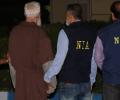
Tahawwur Hussain Rana, a Canadian national accused of involvement in the 2008 Mumbai terror attacks, has been extradited to India from the United States. Rana's interrogation is expected to shed light on the role of Pakistani state actors in the attacks, which claimed 166 lives. Indian authorities are particularly interested in his travels across India in the days leading up to the attacks, including visits to Hapur, Agra, Delhi, Kochi, Ahmedabad, and Mumbai. Rana's extradition follows a lengthy legal battle, with the US Supreme Court ultimately denying his application to challenge it. Rana is known to be associated with Pakistani-American terrorist David Coleman Headley, one of the main conspirators of the 26/11 attacks. The investigation into the Mumbai attacks has implicated senior members of terror outfits Lashkar-e-Taiba (LeT) and Harkat-ul Jihadi Islami (HuJI), as well as officials from Pakistan's Inter-Services Intelligence (ISI).
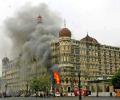
Tahawwur Rana, accused of involvement in the 2008 Mumbai terror attacks, is expected to be extradited to India from the United States soon. The US Supreme Court denied his last-ditch effort to stop his extradition, moving him closer to being handed over to Indian authorities. Rana's extradition is expected to help probe agencies expose the role of Pakistani state actors behind the attacks and shed new light on the investigation. He is associated with Pakistani-American terrorist David Coleman Headley, one of the main conspirators of the 26/11 attacks.

As people across the country await the verdict in the trial of Ajmal Amir Kasab, the lone surviving terrorist caught during the 26/11 Mumbai terror attacks, the trial will be remembered as perhaps the most elaborate and the fastest criminal trial held in India.
In yet another indication of the involvement of Pakistani establishment in the 26/11 Mumbai attack, LeT operative David Headley has corroborated the statement of lone captured terrorist Ajmal Amir Kasab that the terrorists got training from Pakistan Navy.
The trial of Mohammed Ajmal Amir Kasab, the lone terrorist arrested in the Mumbai terror attacks, will begin in the court at Arthur road Central jail on April 15, a special court said here today.
A Mumbai Special Court, which conducted the trial of 26/11 terror strikes, is all set to announce the quantum of punishment on Thursday. The entire country is waiting for Judge M L Tahiliyani to pronounce punishment for lone surviving Pakistani terrorist--Ajmal Amir Kasab.
Maharashtra Home Minister Jayant Patil on Thursday showered praise on the Mumbai Crime Branch, which is investigating the 26/11 terrorist attacks, and claimed that the investigation done by it compelled Pakistan to finally admit that Mohammed Ajmal Amir Kasab was a Pakistani.Patil told reporters that the Mumbai Crime Branch investigated the case properly and collected evidences systematically, which forced Pakistan to admit that Kasab was its national.

Judge M L Tahaliyani has announced May 3 as the date for the verdict after hearing the arguments by both prosecution and the defence.
Amid reports of a rift between them, Pakistan President Asif Ali Zardari and Prime Minister Yousuf Raza Gilani met in Islamabad on Wednesday to discuss the regional security situation after the country's admission that captured Mumbai attacker Ajmal Amir Kasab is its national. The meeting came amid Pakistani media reports that Zardari was angry over Gilani's decision to sack Durrani without consulting him. Durrani had been handpicked by Zardari for the key post last year.
Tahawwur Hussain Rana, a key accused in the 26/11 Mumbai terror attacks, was brought to India on Thursday after being "successfully extradited " from the US, the National Investigation Agency (NIA) said. The 64-year-old Canadian citizen of Pakistani origin landed in Delhi in a special plane on Thursday evening, ending days of speculation of when and how he will be extradited, officials said. The NIA said in a statement that it had secured the successful extradition after years of sustained and concerted efforts to bring to justice the key conspirator behind the 2008 mayhem that claimed 166 lives. Rana is accused of conspiring with David Coleman Headley alias Daood Gilani, and operatives of designated terrorist organisations Lashkar-e-Taiba (LeT) and Harkat-ul-Jihadi Islami (HUJI) along with other Pakistan-based co-conspirators, to carry out the the three-day terror siege of India's financial capital.
Videos this week: News and Bollywood masala!
India on Wednesday said it has become increasingly clear that 'state actors' were involved in executing the 2008 Mumbai terror attacks and that without state support the terror control room could not have been established in Pakistan.
'Will this near-war, India's strongest military response so far, buy India another seven years of deterrence?' asks Shekhar Gupta.
In a report tabled before an anti-terrorism court, Pakistani investigators said there is "sufficient incriminating evidence" against the arrested terrorist, including Lashkar-e-Taiba's operations chief Zakiur Rehman Lakhvi.
The investigating officer in the 26/11 terror attack case, who had helped build a water-tight case against Pakistani terrorist Mohammed Ajmal Amir Kasab, has resigned, police sources said.
A Pakistani anti-terror court on Wednesday framed charges against Lashkar-e-Tayiba's operations commander Zakiur Rehman Lakhvi and six others for involvement in the Mumbai attacks and declared 16 people, including Ajmal Amir Kasab, as proclaimed offenders.
Evidence in 26/11 Mumbai terror attack case involving Mohammad Ajmal Amir Kasab and nine slain terrorists clearly showed it to be a "pre-meditated" assault on the country's commercial capital by Pakistani terrorists, guided by their handlers from across the border, the Supreme Court was told on Thursday.

'He is the key to unravel the 26/11 conspiracy.'
Pakistan said on Sunaday that it will examine the findings of its probe into 26/11 on Monday as the media in Islamabad reported that the government will file cases against five Pakistanis, including lone captured terrorist Ajmal Amir Kasab, for planning the Mumbai attacks.
Special Public Prosecutor Ujjwal Nikam handed over a sealed envelope to Judge M L Tahiliani during the ongoing trial into the Mumbai terror attacks. He sought the judge's permission to keep the identities of six FBI agents, who are likely to depose during the trial, a secret.
A Pakistani national has been detained in Dhaka in connection with the Mumbai terror attack. The Pakistani detainee was reportedly responsible for running the financial network of the LeT and preparing the groundwork for the actual attack. The Pakistani national held in Dhaka is also linked to the LeT.
The meeting takes place a day after there was confusion over reports that Pakistani authorities have filed a case against Ajmal Amir Kasab, the lone terrorist captured alive during the November 26, Mumbai attacks and 12 others in connection with the strikes but the government denied it.
A joint exercise, `Tropex' of the country's armed forces, Army, Navy and Air Force--began at Madhavpur in Porbandar on Monday, which is just 80 nautical miles from Pakistan's trade centre Karachi. The exercise gains significance as it is being carried out when the relationships between India and Pakistan are strained after the Mumbai terror attacks.
The Anti-Terrorism Court also observed that the statement of Ajmal Amir Kasab, the lone surviving Mumbai gunman, could not be produced as evidence in the court, as it was not according to the guidelines set in the Article 43 of the country's penal code.
The United States has approved the extradition of Tahawwur Rana, accused of involvement in the 2008 Mumbai terror attacks, to India. The decision was announced by President Donald Trump during a joint press conference with Prime Minister Narendra Modi in the White House. India is currently working on the logistics of Rana's surrender and extradition, with several final steps to be completed before he is sent back to India. The joint statement issued by India and the US during Prime Minister Modi's visit reaffirmed their commitment to fighting terrorism and eliminating terrorist safe havens. The leaders also called on Pakistan to bring to justice the perpetrators of the 26/11 Mumbai and Pathankot attacks. Rana, a Canadian national of Pakistani origin, is currently lodged at a metropolitan detention center in Los Angeles. He is associated with Pakistani-American terrorist David Coleman Headley, one of the main conspirators of the 26/11 attacks.
Responding to Pakistan's queries, India on Wednesday handed over to it the third dossier of evidence on the Mumbai terror attacks, including the certified DNA report and statement of the lone arrested terrorist Ajmal Amir Kasab.The voluminous documentation, comprising replies to ten queries made by Pakistan and 15 booklets, were handed over by a senior official of the Ministry of External Affairs when he called a senior diplomat of the Pakistan High Commission.
Pakistan President Asif Ali Zardari on Friday fired the special public prosecutor in the Mumbai terror attack case, more than a week after the senior lawyer sparked a controversy claiming that Islamabad had formally requested India to hand over Ajmal Amir Kasab, the lone terrorist arrested during the three-day terror siege..
India's approach of "cohesive diplomacy" has "forced" Pakistan to admit that its soil was used for launching the Mumbai attacks, Home Minister P Chidamabaram said on Monday and asked Islamabad to complete its probe and punish all the guilty.
A brief statement issued by the Prime Minister's House said Yousuf Raza Gilani had sacked Durrani 'for his irresponsible behaviour (of) not taking Prime Minister and other stakeholders into confidence and lack of coordination on matters of national security'. Gilani was quoted by Geo News channel as saying that he had sacked Durrani for commenting on the issue of the nationality of Iman alias Ajmal Kasab without taking him (Gilani) or the government into confidence.
A five-member team of the Interpol met Mumbai Joint Commissioner of Police (Crime) Rakesh Maria on Monday and sought details of Ajmal Amir Kasab, the lone terrorist captured alive during the November 26 terror strikes.
In a U-turn, Pakistan President Asif Ali Zardari has said there is still no 'real evidence' that the terrorists who attacked Mumbai came from Pakistan nor had it been established that the lone arrested attacker Mohammed Ajmal Amir Kasab hailed from the country's Punjab provinceZardari, who earlier acknowledged that the perpetrators of the Mumbai carnage of November 26 could be 'non-state actors' from Pakistan, made these remarks.
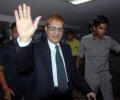
Justice Madanlal Laxmandas Tahaliyani, a retired judge of the Bombay high court, was on Monday sworn in as the new Maharashtra Lokayukta.
Tahawwur Hussain Rana, a Pakistan-born Canadian national and close associate of David Coleman Headley, is set to be extradited to India from the US. Rana was involved in the planning and execution of the 2008 Mumbai terror attacks, which killed 166 people, including six Americans. He assisted Headley in obtaining a visa for India, established a front company in Mumbai, and helped in reconnaissance of targets in Mumbai and New Delhi. Rana was convicted in the US for providing material support to Lashkar-e-Taiba (LeT) and sentenced to 14 years in prison. His extradition to India will allow authorities to question him about his involvement in the Mumbai attacks and potentially uncover new information about the role of Pakistani state actors.
Buoyed by a Pakistan court's order -- that stated that the trial of terrorist Ajmal Amir Kasab cannot be separated from that of the seven Pakistani suspects arrested for planning the terror siege on Mumbai -- Lashkar-e-Tayiba commander Zakiur Rehman Lakhvi plans to file a petition in the Supreme Court seeking an acquittal. "We will approach the Supreme Court in a few days, following the Lahore high court's order," said Lakhvi's lawyer Khwaja Sultan.
M L Tahiliyani has been appointed as a Special Judge to conduct the trial in the November 26 terror attacks in the city, Police Commissioner Hasan Gafoor said omn Monday.
The Pakistan government on Monday night said that it has received a letter written by Ajmal Amir Iman Kasab, the lone terrorist captured for the Mumbai terror attacks, and was examining its contents.The Foreign Office in Islamabad said the letter, in which Kasab sought legal assistance and a meeting with Pakistani officials, was forwarded to the Pakistan High Commission in New Delhi by the Indian government.
Ismail Khan, an accomplice of arrested terrorist Mohammed Ajmal Amir Iman alias Kasab, is the one who gunned down three top police officials in a gun battle at Cama Hospital, according to Kasab's statement recorded by the police. Anti-Terrorism Squad chief Hemant Karkare, Additional Commissioner of Police Ashok Kamte and encounter specialist Vijay Salaskar were shot dead by Ismail Khan.
Appointed to defend Mohammed Amir Ajmal Kasab, the lone surviving terrorist in the 26/11 Mumbai terror attack, Advocate S G Abbas Kazmi on Thursday said he loves challenges and will do his best to abide by the court's decision."The judge has decided to appoint me as the lawyer (of Kasab) and I feel that it is in honour of our nation that Kasab should have a lawyer to defend him," he said.
Ajmal Amir Iman Kasab, the lone terrorist captured during the Mumbai attacks on November 26 last year, is a Pakistani national, a Pakistan Foreign Office spokesman said on Wednesday. However, Pakistan Information Minister Sherry Rehman stated that Kasab was not linked to any official agency.
The trial in the Mumbai terror attack case opened on Friday with the sole surviving terrorist Mohammed Amir Ajmal Kasab seeking retraction of his confession and the prosecution hinting at Pakistan army's involvement in training him and the other terrorists, who were killed.
